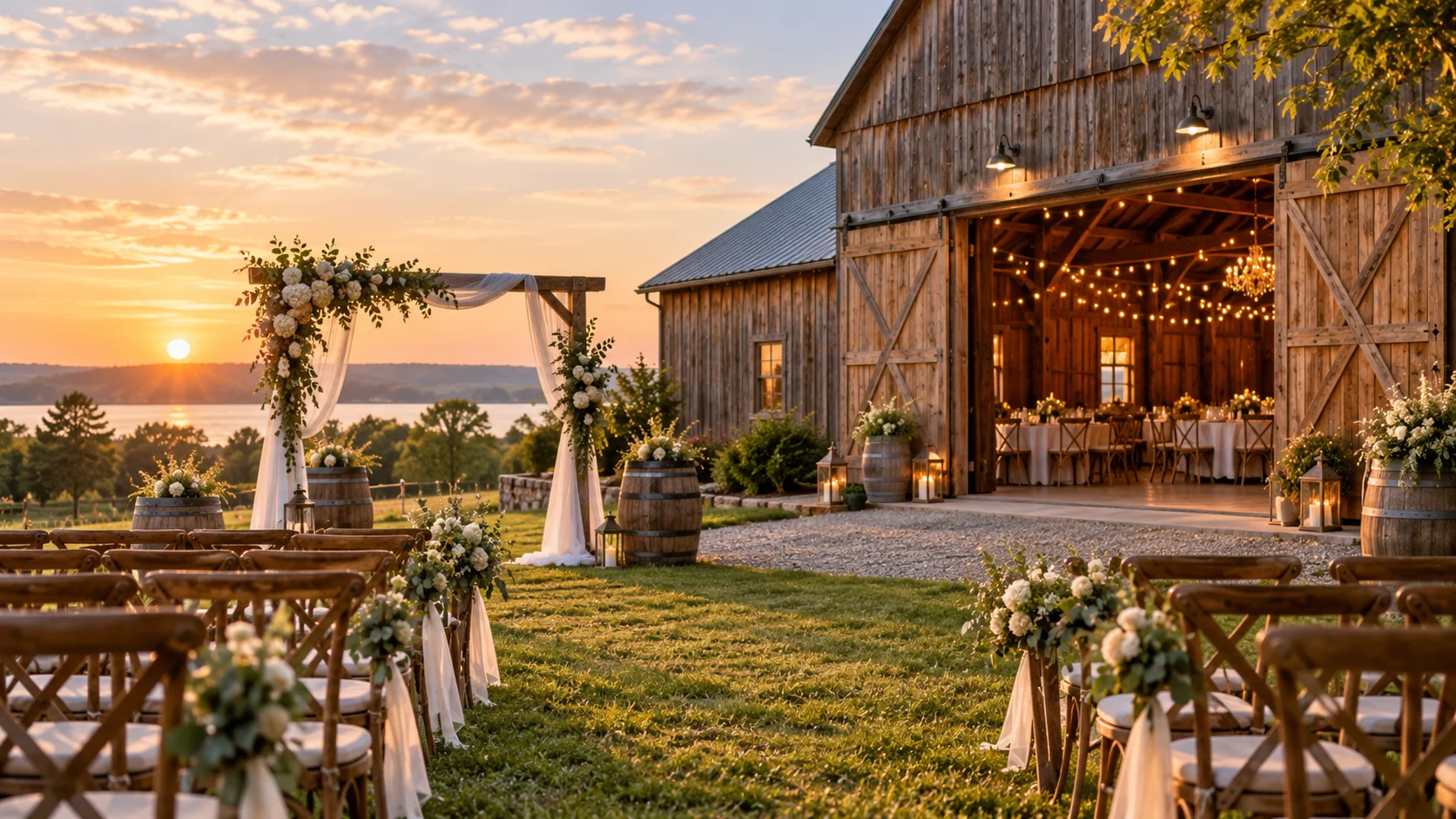
A barn wedding in Prince Edward County might begin with a simple vision: an outdoor ceremony, a beautiful old barn, dinner with family and friends, and a relaxed evening in the countryside. Turning that picture into a wedding that runs smoothly takes considerably more planning than choosing the right flowers or table settings.
Historic barns and rural properties come with their own considerations, from catering access and weather protection to accommodation, transportation and local regulations. The most successful plans account for those practical details early, leaving room for the atmosphere that made a countryside wedding appealing in the first place.
What Makes a Barn Wedding Different From a Traditional Venue?
A barn wedding combines the character of a rural property with the requirements of a modern event. Unlike a conventional banquet hall, which may have standardized layouts and established services, a countryside venue can offer greater flexibility while requiring more individual decisions.
The Appeal of a Historic Countryside Setting
Prince Edward County’s agricultural landscape, historic buildings and lakeside surroundings provide a distinctive setting for weddings.
Restored barns often retain architectural details such as exposed timber beams, original woodwork, high ceilings and large doors opening onto surrounding fields. Depending on the property, couples may be able to hold their ceremony outdoors, welcome guests to a garden or courtyard, and host dinner inside the barn.
The setting can also influence the atmosphere of the celebration. Long dining tables, seasonal flowers and understated decorations may complement the building without extensive styling.
Rustic doesn’t necessarily mean informal, either. A barn can accommodate an elegant seated dinner, carefully designed lighting and a traditional wedding programme just as comfortably as a more relaxed gathering, provided the facilities support the chosen format.
Practical Trade-Offs Couples Should Understand
The biggest difference between barn weddings and conventional reception venues is often infrastructure.
Some restored barns operate as fully equipped event spaces with heating, washrooms, catering facilities and permanent furniture. Others provide a more basic setting where couples must arrange equipment and services separately.
Outdoor areas create additional decisions about ceremony seating, weather protection, lighting and accessible pathways.
Rural locations can also affect supplier deliveries and guest transportation. A property may offer beautiful surroundings but limited nearby accommodation or no dependable late-night taxi service.
Before falling in love with a venue’s appearance, establish whether its facilities suit the wedding you intend to host.
How to Choose the Right Barn Wedding Venue
The best barn wedding venue isn’t necessarily the largest, most scenic or least expensive. It’s the one that can accommodate your guests, support your preferred wedding format and operate comfortably within your budget.
A useful venue tour should examine how the property functions during an actual event, not just how it looks when everything is empty.
Guest Capacity and Reception Layout
Start with a realistic guest count rather than the maximum number you could potentially invite.
Ask how many guests can be seated comfortably for dinner inside the barn. Confirm that the stated capacity applies to your preferred arrangement, including dining tables, a head table if required, a dance floor and circulation space.
A venue suitable for 120 guests at a standing reception may accommodate fewer people at round tables with a large dance floor.
If you’re considering a long-table dinner, request a sample floor plan. The distance between tables, washroom access and space for servers can affect how comfortably the evening operates.
Indoor and Outdoor Ceremony Options
Many couples choose countryside venues partly because they want an outdoor ceremony.
Check whether the ceremony location is included in the rental fee and whether it provides practical access for guests and suppliers.
Look at the orientation of the seating, exposure to afternoon sun, nearby noise sources and the walking route from parking.
Then inspect the alternative indoor ceremony space. It should accommodate the same guest count and be available if weather conditions change.
A smaller indoor room isn’t a dependable backup for a larger outdoor ceremony.
Accessibility, Washrooms and Guest Comfort
Older buildings can present accessibility challenges even after substantial renovations.
Confirm whether guests using wheelchairs or mobility aids can reach the ceremony, reception, washrooms and parking areas without encountering unsuitable steps, narrow routes or uneven ground.
Ask about heating, ventilation, drinking water and washroom capacity. Depending on the season, consider whether guests will be comfortable during dinner and dancing.
An attractive gravel courtyard may work beautifully in dry weather but become difficult to navigate after heavy rain.
Catering Facilities and Supplier Access
Clarify whether the venue has an established catering partner, requires approved suppliers or permits couples to hire their own vendors.
Independent catering can provide menu flexibility, but the facilities must support it.
A caterer may need refrigeration, food preparation space, electrical access and a sheltered service area. Deliveries require suitable vehicle access and enough time for setup.
Ask suppliers to review the property before finalizing complex arrangements. Their requirements may reveal additional rental or staffing costs that aren’t obvious during a venue tour.
Contract Terms and Booking Restrictions
Before signing, establish exactly what the rental agreement covers.
Pay attention to setup and teardown hours, cancellation terms, deposits, supplier restrictions, alcohol arrangements and the latest permitted time for music.
A venue may also have restrictions on candles, confetti, fireworks, outdoor activities or decorative installations.
Use this comparison matrix when visiting shortlisted venues:
| Decision factor | What to confirm | Why it matters |
|---|---|---|
| Capacity | Seated dinner capacity and indoor ceremony capacity | Avoids unsuitable layouts and overcrowding |
| Weather backup | Guaranteed indoor space and setup arrangements | Protects the ceremony plan |
| Facilities | Washrooms, heating, accessibility and electrical supply | Affects guest comfort and additional rentals |
| Catering | Approved suppliers, kitchen access and service requirements | Determines flexibility and operating costs |
| Transportation | Parking, shuttle access and nearby accommodation | Influences guest logistics |
| Contract | Inclusions, extra charges, cancellation and operating hours | Establishes the actual commitment |
If two venues seem equally appealing, compare them using the same proposed guest count and wedding programme. Otherwise, you’re comparing different events rather than different properties.
Choosing the Best Season for a Barn Wedding in Prince Edward County
There isn’t one ideal wedding season for every couple. Spring, summer and autumn each offer different advantages, while colder-month celebrations depend heavily on indoor facilities.
The right choice is determined by how much of the wedding you want outdoors and how comfortably the venue accommodates changing conditions.
Spring Weddings — Weather Flexibility
Spring can bring fresh greenery, quieter countryside scenery and a sense of renewal.
However, cool temperatures, wet ground and unpredictable rainfall make a dependable indoor option particularly valuable.
Check whether outdoor pathways are suitable after rain and whether the barn can be heated comfortably.
A spring wedding works best when the indoor celebration is just as appealing as the outdoor version.
Summer Weddings — Outdoor Comfort and Daylight
Summer offers longer daylight hours and greater opportunities for outdoor ceremonies, photographs and cocktail receptions.
The trade-offs include heat, insects and potentially busy accommodation periods.
Visit The County, the region’s official tourism organization, advises visitors to book accommodation early during popular summer periods and long weekends.
Ask whether the ceremony space receives direct afternoon sun, whether shaded seating is available and how the venue manages ventilation during warm evenings.
Autumn Weddings — Scenery and Cooler Evenings
Autumn can provide attractive countryside colours and comfortable conditions for outdoor activities earlier in the day.
Evenings become cooler, however, and daylight hours shorten.
Couples should pay attention to ceremony timing, portrait photography and heating inside the reception space.
If outdoor cocktails or photographs are central to the plan, schedule them with available daylight in mind rather than assuming summer conditions.
Off-Season Celebrations — When Indoor Facilities Matter
A winter or late-autumn barn wedding may appeal to couples who prefer an intimate celebration centred on food, lighting and atmosphere.
But not every rural wedding venue is equipped for year-round events.
Confirm that the building is properly heated, access roads and parking can be maintained, and suppliers can deliver safely in poor conditions.
| Season | Main appeal | Planning challenge | Priority |
|---|---|---|---|
| Spring | Fresh landscape and seasonal flowers | Rain, mud and cooler temperatures | Indoor backup and accessible paths |
| Summer | Long daylight hours and outdoor activities | Heat, insects and accommodation demand | Shade, ventilation and early bookings |
| Autumn | Seasonal scenery and comfortable daytime conditions | Shorter daylight and colder evenings | Ceremony timing and heating |
| Off-season | Intimate indoor atmosphere | Weather-dependent travel and building suitability | Fully equipped indoor facilities |
Seasonal dates may also affect venue and supplier availability. Compare actual quotations rather than assuming a particular month will automatically be less expensive.
Building a Realistic Barn Wedding Budget
A barn wedding budget should cover the complete celebration, not just the property’s rental fee.
The easiest approach is to separate costs by how they behave as the wedding changes.
Fixed Costs Versus Per-Guest Expenses
Fixed costs generally remain similar regardless of whether 70 or 100 guests attend. They can include venue rental, photography, entertainment and some coordination services.
Variable costs increase with attendance. Catering, beverages, place settings, guest transportation and certain rentals frequently fall into this category.
Some costs rise in steps rather than gradually.
For example, increasing attendance beyond a venue’s existing seating capacity might require additional furniture, washrooms or a different room configuration.
Before finalizing invitations, ask what changes financially if your guest list increases or decreases.
Venue-Only Rentals Versus Packages
A venue-only agreement may look affordable initially but require separate arrangements for tables, chairs, catering, staffing and cleaning.
A package with a higher starting price may include several of those essentials.
Two venues with similar rental fees can produce very different final budgets. Understanding what a barn wedding quote really includes helps couples make a fair comparison.
Request an itemized total showing rental fees, catering, equipment, service charges and applicable taxes.
Ontario’s harmonized sales tax is 13% on most taxable goods and services. Quotes should clearly indicate whether HST is included.
Setting Aside Money for Unexpected Costs
A contingency allowance provides flexibility when plans change.
Potential additions include extra staffing hours, equipment rentals, transportation adjustments and weather-related installations.
Rather than choosing an arbitrary emergency amount, identify the expenses most likely to change at your particular venue.
Ask suppliers to provide optional pricing for additional service hours, extra guests or alternative equipment. That gives the contingency budget a practical basis.
Keep personal wedding expenses, such as attire and rings, separate from venue operating costs so the budget remains easy to understand.
Planning an Outdoor Ceremony With a Dependable Backup
An outdoor ceremony needs more than a beautiful setting. A practical rain plan for an outdoor wedding should be agreed upon before the final arrangements are confirmed.
The objective is to create two workable ceremony setups, not one ideal arrangement and a vague promise to move indoors if necessary.
Ceremony Layout, Sound and Seating
Begin with the guests’ experience.
Check that everyone can see the ceremony area, hear the officiant and reach their seats comfortably.
Outdoor sound can be affected by wind, distance and surrounding activity. Confirm whether microphones and speakers are available and who operates them.
Consider access to shade and water during warm weather, particularly for older guests and families with young children.
Decorations should be secure and suitable for outdoor conditions without interfering with pathways.
Indoor Backup Capacity and Setup
The alternative ceremony space must be capable of hosting the complete guest list.
Confirm its seating layout, electrical requirements and accessibility.
If the ceremony and reception share the same room, establish who will change the setup, how long it will take and where guests will wait during the transition.
A permanent covered patio may be adequate for light rain, but it shouldn’t automatically be considered safe during thunderstorms.
Environment and Climate Change Canada advises seeking shelter in a substantial enclosed building or suitable hard-topped vehicle when thunder is heard. Tents and open-sided shelters do not provide reliable lightning protection.
Weather Decisions and Supplier Coordination
Assign one person to coordinate the weather decision with the couple, venue and suppliers.
For straightforward indoor alternatives, the final decision may be possible closer to the wedding. Tent installations or significant layout changes can require earlier commitments.
Review forecasts during the final week, confirm the setup within suppliers’ deadlines and establish how guests will receive any changes.
Safety decisions must override the preferred schedule when conditions become hazardous.
Legal and Practical Details of Getting Married in Ontario
A countryside wedding still requires compliance with Ontario marriage law and applicable venue, municipal and alcohol-service requirements.
These responsibilities should be confirmed before arrangements become difficult to change.
Marriage Licences and Authorized Officiants
In Ontario, couples generally need a valid marriage licence and an authorized officiant to be legally married. Publication of banns is permitted as an alternative only in specific circumstances.
Marriage licences are valid for three months from issuance.
The provincial government allows couples to apply through participating municipalities, including through its online application process where available. The licence must still be collected in person.
Prince Edward County’s Clerk’s Office also issues marriage licences by appointment.
The ceremony must be conducted by someone legally authorized under Ontario’s Marriage Act. Religious officials must have the appropriate registration or authority, while eligible civil officiants include municipal clerks or authorized delegates and certain judicial officials.
At least two witnesses must be present for the legal ceremony.
A friend can help lead a personalized celebration, but that doesn’t automatically make the friend legally authorized to solemnize the marriage.
Alcohol Service and Venue Responsibilities
Alcohol arrangements require particular attention at rural venues.
Ontario’s Alcohol and Gaming Commission of Ontario (AGCO) regulates liquor licensing and Special Occasion Permits.
Whether a wedding requires a Special Occasion Permit depends on the property’s licensing status and how alcohol will be sold, served or consumed.
A private wedding at an otherwise unlicensed event space may require a permit, while a properly licensed venue may operate under its existing licence, subject to its conditions.
Ask the venue and bar provider to confirm:
- Which licence or permit authorizes alcohol service
- Who is responsible for obtaining any required permit
- Who supplies and serves the alcohol
- What service hours and areas are permitted
- What insurance and staffing requirements apply
Don’t assume that hiring a bartender automatically resolves the event’s licensing obligations.
Noise Restrictions, Insurance and Supplier Requirements
Prince Edward County has a municipal noise by-law, and venue operations may also be subject to property-specific approvals, zoning requirements and contractual restrictions.
Ask the venue for its actual permitted operating hours rather than assuming music can continue until a particular time.
The County’s zoning rules govern how properties may be used, so a converted agricultural building should not automatically be assumed to have approval for commercial weddings.
Insurance requirements also vary. Venues may require event liability coverage, additional insured parties or proof of insurance from suppliers.
Clarify these obligations in writing. Wedding cancellation insurance, when purchased, addresses different risks from event liability insurance.
Accommodation and Transportation for Wedding Guests
Guest logistics can determine whether a countryside wedding feels relaxed or inconvenient.
Once the venue is booked, couples should consider where guests can stay and how to get around Prince Edward County, especially when the reception extends into the evening.
Choosing Accommodation Near the Venue
Prince Edward County includes several distinct accommodation areas, including Wellington, Bloomfield and Picton.
Guests may choose hotels, inns, bed and breakfasts or short-term rentals.
The closest town isn’t necessarily the most convenient place to stay. Compare actual driving routes and consider how guests will reach the venue.
For weddings in the western part of the County, Wellington and Bloomfield may be practical starting points. Picton can offer alternatives, depending on the venue’s location.
Prince Edward County licenses qualifying short-term accommodations, so guests choosing vacation rentals should verify the property’s licensing status and occupancy rules.
Wedding Shuttles and Late-Night Transportation
Organized transportation becomes particularly valuable when accommodation is spread across the region.
Ask guests during the RSVP process whether they intend to use a shuttle.
Group pickup points around a few accommodation clusters rather than arranging individual stops at every property.
Confirm the number of passengers, vehicle capacity, accessibility requirements and departure schedule.
Late-night taxi or rideshare availability shouldn’t be assumed. Visit The County advises advance planning for local transportation because availability can be limited.
Travel Information Guests Need in Advance
A wedding website or guest information page should contain the venue’s full address, arrival instructions, parking arrangements and accommodation suggestions.
Include confirmed shuttle pickup locations, departure times and an accessible transportation contact.
Guests arriving through Belleville by VIA Rail may need an additional connection to their accommodation or venue.
Share these details before the wedding weekend, then provide a final update if arrangements change.
Designing a Wedding Reception Guests Can Enjoy
A countryside wedding reception works best when the programme takes advantage of the venue without asking guests to participate in activities continuously.
A comfortable pace often matters more than the number of attractions.
Making Cocktail Hour Feel Welcoming
Cocktail hour gives guests time to settle into the setting while the couple takes photographs or prepares for dinner.
Provide refreshments, accessible seating and clear directions to the reception space.
Outdoor lawns or courtyards may accommodate lawn games, but activities should remain optional. Some guests will prefer to talk, take photographs or simply enjoy the surroundings.
Consider whether the cocktail area offers shade, weather protection and convenient washroom access.
Guests shouldn’t need to cross the entire property to find somewhere comfortable to sit.
Balancing Dinner, Speeches and Dancing
Reception schedules need enough structure to prevent long gaps without feeling rigid.
A workable sequence might include cocktail hour, guest seating, dinner service, speeches, dessert and dancing.
Discuss speech timing with the caterer. Multiple long interruptions can delay food service and leave guests waiting between courses.
If dinner is served family-style or at a buffet, account for the time required to serve the whole room.
Build in reasonable transitions between activities. A five-minute walk between outdoor cocktails and the barn may take longer when guests are chatting, collecting belongings or assisting children.
Choosing Entertainment for Different Guest Preferences
Entertainment doesn’t have to mean filling every moment.
A DJ or live band can provide a focal point later in the evening, while a photo booth, lawn games or quieter seating area offers alternatives.
A countryside venue may offer space for several activities, but not every option suits the same guests or schedule. It helps to compare wedding reception entertainment ideas before choosing what to include.
Consider the guest list, available space, supplier requirements and permitted sound levels.
For a mixed-age celebration, giving guests a choice between dancing and quieter activities may be more valuable than booking several competing attractions.
A Practical Barn Wedding Planning Timeline
Planning becomes easier when decisions are made in the order that they affect one another.
There is little value in finalizing furniture rentals before confirming the venue layout, or creating a reception schedule before establishing the catering service requirements.
Use this timeline as a working framework and adjust deadlines to your actual contracts.
| Planning stage | Main decisions | Practical outcome |
|---|---|---|
| Early planning | Budget, guest count, preferred season, venue shortlist | Realistic wedding format and venue requirements |
| After booking | Venue contract, coordinator, officiant, catering, photography, accommodation | Key suppliers and guest logistics established |
| Final months | Menu, floor plans, rentals, entertainment, transportation | Complete reception layout and draft schedule |
| Final weeks | RSVPs, seating, supplier confirmations, weather contingency, shuttle bookings | Final guest numbers and operational instructions |
| Wedding day | Setup, supplier coordination, ceremony decision, guest communication | Agreed plan delivered by designated people |
Some decisions have dependencies that are easy to overlook.
The guest count affects the room layout, which influences furniture rentals and catering arrangements. The reception end time determines shuttle departures, while permitted venue hours can affect entertainment bookings.
Similarly, the indoor weather backup may change both the ceremony layout and the reception schedule.
A useful final document should identify the activity, time, location and responsible person for each major transition.
For example:
- Ceremony: Officiant and coordinator confirm readiness, guest seating and sound.
- Cocktail hour: Catering team handles refreshments while the coordinator manages photographs and room transitions.
- Dinner: Catering manager and master of ceremonies coordinate service and speeches.
- Evening reception: Entertainment supplier follows the agreed programme and sound restrictions.
- Departure: Transportation coordinator confirms shuttle boarding and the final passenger count.
Give suppliers the same current version of the schedule.
The couple shouldn’t be responsible for answering routine questions about deliveries, microphones or shuttle arrivals throughout their wedding day.
Common Barn Wedding Planning Mistakes and How to Avoid Them
Some planning problems are unique to a particular property, but several mistakes arise from the same underlying issue: making decisions based on how the wedding should look without confirming how it will operate.
Assuming the Venue Includes Every Service
A beautifully furnished barn in promotional photographs doesn’t necessarily come with all the furniture, lighting and decorations shown.
Request an itemized list of inclusions and confirm which equipment belongs to the venue.
Better approach: Compare complete event requirements rather than advertised rental fees.
Leaving Transportation Arrangements Too Late
Guests staying at several different rural properties may struggle to coordinate safe transportation after the reception.
Waiting until the final week can limit vehicle availability and complicate pickup planning.
Better approach: Estimate transportation demand when accommodation arrangements begin, then update passenger numbers after RSVPs.
Planning Around Perfect Weather
An outdoor ceremony may be central to the wedding vision, but it shouldn’t be the only functional arrangement.
A tent or covered porch isn’t a substitute for an appropriate storm shelter, and indoor backup space must accommodate the actual guest count.
Better approach: Approve both outdoor and indoor layouts before the final supplier schedule is confirmed.
Scheduling Too Many Activities
A packed programme can leave guests moving between locations, waiting for announcements or missing time to socialize.
Every additional activity also creates requirements for equipment, staffing and coordination.
Better approach: Choose a few meaningful experiences and give them enough time to be enjoyed.
A barn wedding in Prince Edward County doesn’t need to sacrifice practicality to preserve its countryside character. The strongest plan brings the two together: a venue that suits the guest list, a realistic budget, dependable arrangements for weather and transportation, and a reception schedule that leaves room for people to enjoy one another’s company.
Once those essentials are settled, the setting can do what attracted you to it in the first place — provide a memorable place to celebrate without making the logistics the centre of attention.