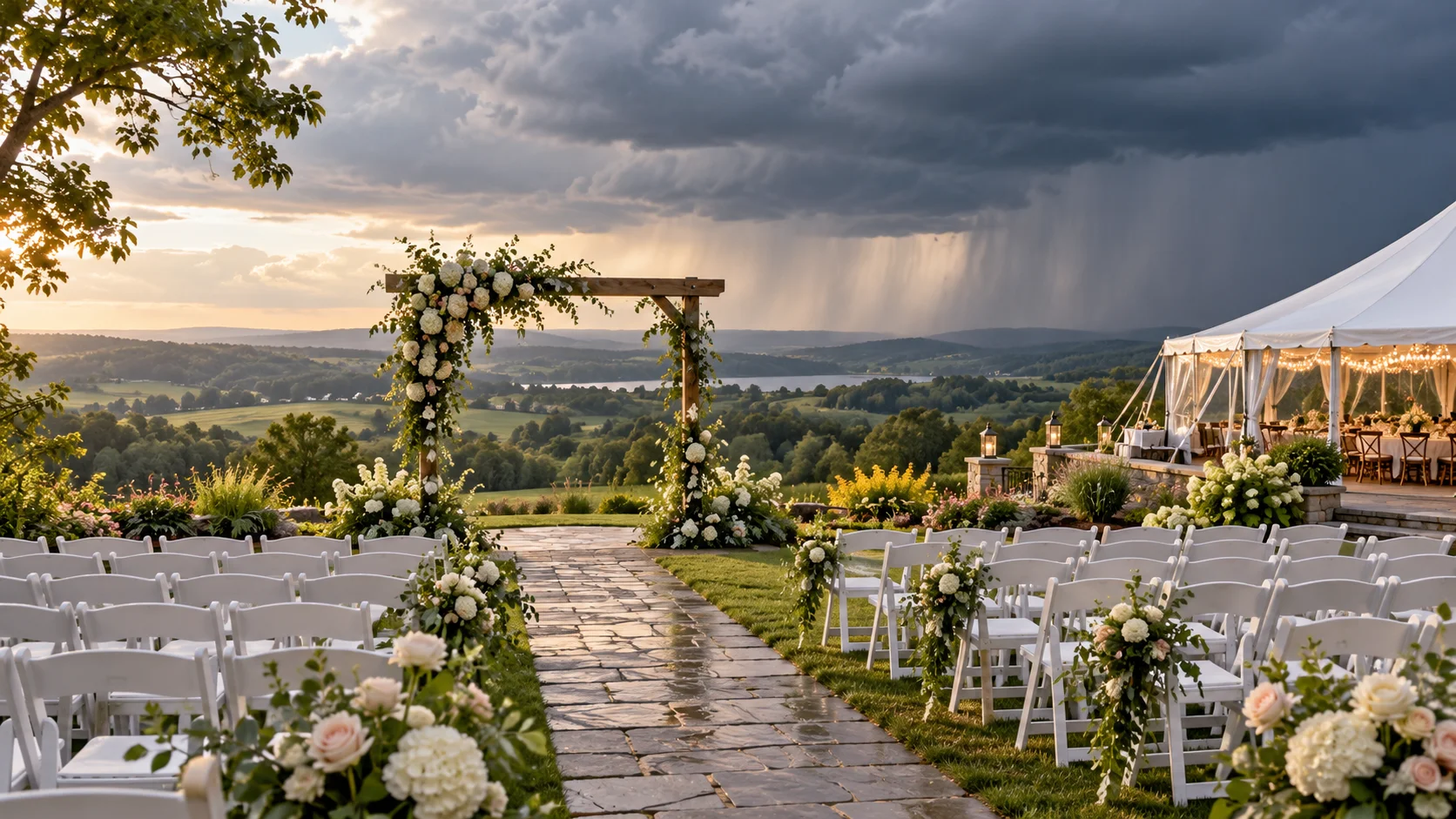
An outdoor ceremony overlooking the countryside is easy to picture on a sunny afternoon. What happens if rain arrives just as guests are taking their seats is a less romantic question, but one worth answering before you book.
A reliable outdoor wedding rain plan covers more than moving everyone under a roof. It establishes where the ceremony will happen, who makes the weather decision, when suppliers need to know, and how guests will reach the alternative location. For Ontario weddings, where changing conditions can include heavy rain, strong winds and thunderstorms, those details can make the difference between a manageable adjustment and a last-minute logistical problem.
What a Proper Wedding Rain Plan Should Include
A workable rain plan is an alternative version of your wedding day that can actually be delivered. It shouldn’t depend on finding an available tent, rearranging an occupied reception room or making several important decisions after guests have arrived.
Three elements deserve particular attention.
A Confirmed Alternative Ceremony Location
The backup ceremony space should be identified before the wedding contract is signed.
Ask to see it during your venue tour. A barn, indoor reception room or permanent covered structure may work, but its suitability depends on the weather conditions and the building itself.
Find out whether the backup space is reserved exclusively for your wedding and whether moving the ceremony there involves an additional charge.
A venue’s statement that it has indoor facilities isn’t the same as a commitment that those facilities will be available for your ceremony.
Enough Space for All Guests and Suppliers
The alternative location must accommodate your actual guest count, including accessible seating, circulation routes and space for the wedding party.
It also needs room for the officiant, photographer and any musicians or sound equipment.
A room that comfortably holds 100 people for cocktails might not accommodate 100 seated guests facing a ceremony area. Request a floor plan showing the proposed layout rather than relying on the room’s general capacity.
An Indoor Ceremony Layout That’s Ready to Use
The strongest backup arrangements are planned alongside the preferred outdoor setup.
Confirm which chairs will be used, where the ceremony backdrop will go, how the aisle will work and whether microphones will be available.
If the same room hosts the reception, ask who will handle the transition and how long it will take. A ceremony beginning at 4 p.m. can create complications if reception tables are already occupying the entire space.
Comparing Three Common Rain-Plan Options
Not every covered space offers the same protection or requires the same preparation.
| Backup option | Main advantage | Main limitation | Best suited to |
|---|---|---|---|
| Indoor venue space | Established shelter, facilities and utilities | May require a different layout or reception reset | Reliable ceremony backup |
| Covered patio or permanent structure | Preserves some outdoor atmosphere | Wind-driven rain and lightning exposure may remain | Light rain without hazardous weather |
| Rented wedding tent | Flexible location and layout | Installation, permits, ground conditions and weather restrictions | Planned outdoor receptions with sufficient preparation time |
Moving the Ceremony Indoors
An appropriate indoor room is generally the most practical option when adverse weather makes an outdoor ceremony unsuitable.
It avoids relying on temporary equipment and usually gives guests easier access to washrooms, heating or cooling, and established electrical facilities.
The trade-off is flexibility. If your ceremony and reception share a room, the venue needs a realistic changeover plan.
Ask whether the indoor setup can be prepared in advance without interfering with dinner service. If not, establish how many staff members will be available to manage the transition.
Using a Covered Patio or Permanent Structure
A roofed terrace or pavilion can work well during light, steady rain, provided the seating remains dry and the structure is suitable for the conditions.
However, rain protection is not the same as storm protection.
Environment and Climate Change Canada advises people to seek shelter in a substantial enclosed building or suitable hard-topped vehicle when thunder is heard. Open-sided shelters, gazebos and similar structures do not provide reliable lightning protection. Outdoor activities should not resume until at least 30 minutes after the last thunder.
A covered patio should therefore be treated as a conditional option, not the sole backup for severe weather.
Renting a Wedding Tent
A properly planned event tent can protect against ordinary rainfall, but it introduces several practical requirements.
Before selecting one, establish:
- Whether the installation site drains adequately after heavy rain.
- Whether sidewalls, flooring, lighting and heating are included.
- How the tent will be anchored and what wind limits apply.
- Whether electrical cables and equipment can be protected from water.
- Who is responsible for permits, inspections and installation approvals.
- When the rental company requires a final decision.
Under Ontario’s Building Code, a tent or group of tents qualifies for the general building-permit exemption only when the aggregate area is no more than 60 square metres, it is not attached to a building, and it is more than three metres from other structures. Municipal zoning, fire-safety and other requirements may still apply.
Have the venue and tent supplier confirm applicable requirements with the local building department. A temporary tent should not be assumed to provide safe shelter during lightning or severe winds.
When Should You Make the Weather Decision?
The right decision deadline depends on how long the alternative setup takes to prepare.
Moving chairs into an existing indoor room might require relatively little notice. Installing a tent, changing supplier deliveries or reorganizing the entire reception could require decisions days earlier.
The following timeline is a practical planning framework, not an official weather-warning schedule.
One Week Before the Wedding
Decision-makers: Couple, wedding planner and venue coordinator.
Review the forecast using Environment and Climate Change Canada’s WeatherCAN app or official weather information, which provides forecasts and weather alerts.
At this stage, the objective is preparation rather than making a final decision based on an uncertain forecast.
Confirm that the backup space is reserved, the alternative floor plan is workable and every supplier knows what changes might be required.
If a tent is being considered, check the installation deadline. Waiting until the wedding morning may not be an option.
The Final 48–72 Hours
Decision-makers: Designated wedding coordinator, in consultation with the couple, venue and affected suppliers.
This is often the practical window for committing to an alternative setup that requires substantial preparation.
Review updated forecasts, weather alerts, predicted wind conditions and site readiness.
Environment and Climate Change Canada distinguishes between watches, which indicate conditions favourable for hazardous weather, and warnings, which indicate severe weather is occurring or expected. The full alert text matters more than a simple rain-percentage icon.
Decide whether the outdoor ceremony remains feasible under the agreed conditions. If a tent must be installed or significant equipment relocated, make that decision before supplier deadlines expire.
Record the decision and distribute the revised schedule.
The Morning of the Ceremony
Decision-maker: The person authorized in the wedding plan, with the venue or safety lead able to stop unsafe outdoor activity.
Confirm the latest local conditions, guest arrival routes and the readiness of the selected ceremony space.
If the indoor backup is already prepared, the final location announcement should happen before guests begin travelling to the ceremony area.
Avoid switching repeatedly between outdoor and indoor plans because each new forecast looks slightly different.
A useful arrangement is one person with authority to confirm the location and a separate safety provision allowing the venue or responsible professionals to suspend activities when conditions become hazardous.
Safety overrides the timeline. Thunder, dangerous winds or other immediate hazards require action regardless of an earlier decision to proceed outdoors.
How Rain Affects More Than the Ceremony
A dry ceremony location doesn’t automatically mean the rest of the wedding can continue unchanged.
Guest Arrival, Parking and Accessible Routes
Rural venues may have gravel parking areas, lawns, garden paths or outdoor entrances.
Heavy rain can make some routes muddy, slippery or difficult for guests using wheelchairs, walkers or mobility aids.
Check the full route from parking to the ceremony, washrooms and reception.
For venues in Prince Edward County, where guests may arrive from different accommodations, clear directions and a designated drop-off area can be particularly useful.
Accessibility should be built into the backup layout, not addressed only after someone encounters a problem.
Photography, Sound and Electrical Equipment
Rain can change photography locations and create problems for outdoor sound systems.
Identify indoor portrait locations with suitable lighting. Confirm whether the photographer can use covered entrances, windows or other protected spaces without interfering with guests.
Musicians and audiovisual suppliers should determine which equipment can operate outdoors and what protection is required.
Never assume that a plastic cover makes electrical equipment safe in wet conditions. Equipment installation and operation should follow the supplier’s instructions and applicable electrical-safety requirements.
Catering, Furniture and Supplier Logistics
A sudden move indoors can affect food service, bar placement, furniture access and delivery timing.
Caterers need clear routes between food preparation areas and guest seating. Rental suppliers need sufficient access to move furniture without blocking entrances.
Confirm whether suppliers can accommodate the alternative layout within their contracted hours.
The inconvenience of relocating flowers is minor compared with discovering that the catering team cannot safely serve dinner from the revised setup.
What to Ask Your Wedding Venue About Its Rain Policy
The venue’s weather contingency should form part of the wider barn-wedding planning process, alongside capacity, supplier arrangements, access and the overall wedding schedule.
Before paying a deposit, ask the venue to clarify the following in writing:
- Backup location: Which specific space is guaranteed, and is it reserved for your event?
- Capacity: Does the alternative layout accommodate all guests seated for the ceremony?
- Additional fees: Are there charges for moving furniture, using another room, installing a tent or extending staffing hours?
- Decision deadline: What is the latest time the ceremony location can change without disrupting setup?
- Responsibility: Who makes the final location decision, and who can suspend activities for safety?
- Suppliers: Who coordinates changes with caterers, rental companies, photographers and musicians?
- Weather restrictions: What happens during thunderstorms, strong winds or conditions that prevent the property from operating safely?
- Contract terms: What provisions apply if neither the preferred nor backup arrangement can be used?
A particularly revealing question is: Can you show us exactly how our guest count would be accommodated indoors?
If the answer remains vague, the backup arrangement may not be fully developed.
How to Communicate a Last-Minute Change to Guests
Guests shouldn’t need to check several group chats to discover where the ceremony is happening.
Choose one communication channel in advance, such as email, a wedding website update or a coordinated text-message list. Ask a trusted person other than the couple to manage it.
A useful message provides the revised location, confirms whether the timing has changed and explains any practical differences in arrival.
Example guest message:
Hi everyone! Due to the weather forecast, we’ve moved our ceremony indoors to the main reception barn. The ceremony will still begin at 4:00 p.m., and we recommend arriving by 3:30 p.m.
Please use the main parking entrance and follow the signs to the barn. An accessible drop-off area is available beside the main entrance; contact our event coordinator if you need assistance.
We’re looking forward to celebrating with you!
If the ceremony time changes, state the new time clearly rather than burying it in a longer message.
Use direct communication for guests who may not receive digital updates.
Final-Week Rain-Plan Checklist
Keep one shared document showing the assigned responsibilities and completed confirmations.
| Task | Responsible Person | Deadline | Confirmation |
|---|---|---|---|
| Check weather forecast and alerts | Wedding coordinator | 7 days before | Initial review recorded |
| Confirm backup location and seating | Venue coordinator | 7 days before | Floor plan approved |
| Verify tent and equipment deadlines | Rental supplier | 72 hours before or earlier if required | Setup arrangements confirmed |
| Decide on weather-dependent installations | Authorized decision-maker | Before supplier cutoff | Decision shared with vendors |
| Confirm guest arrival and accessible routes | Venue coordinator | Day before | Routes checked |
| Confirm ceremony location and safety arrangements | Venue safety lead and coordinator | Wedding morning | Final setup approved |
| Communicate any change to guests | Designated contact | Before guest departure | Message distributed |
The deadlines are suggested planning checkpoints. Replace them with the venue’s and suppliers’ actual contractual requirements.
A rain plan shouldn’t require everyone to hope that the forecast improves. It should allow the wedding to proceed comfortably when conditions permit, while providing a clear, safe alternative when they don’t.
Before booking an Ontario outdoor wedding venue, make sure you’ve seen the backup space, understood the decision process and confirmed who is responsible for carrying it out. The goal isn’t to guarantee sunshine. It’s to avoid making important decisions for the first time while guests are already arriving.